Shazam for Clothes: What It Is + Best Apps (2026)
Yes, there's a Shazam for clothes. Compare the best apps to find any outfit from a photo, then try the per-item winner free.
Seen a look you love? Upload a screenshot and find where to buy it for less.
Try it freeSomeone messaged me a screenshot last week, a still from a music video, a sequin party dress caught mid-spin, with the caption "is there a Shazam for clothes? because I NEED this." I get a version of that message constantly. So let me answer it properly, because the short answer is yes, and the longer answer is that not all of them actually let you shop.
Yes, there's a Shazam for clothes: an app that identifies clothing from a photo and finds where to buy it, the same way Shazam names a song from a few seconds of audio. The catch is that the analogy is messier than it sounds, and the apps people point you to (Google Lens, Pinterest, a couple of buzzy launches) each solve a different slice of the problem. I build one of these tools myself, so I'll be upfront about where mine wins and where it loses. Quick disclosure: FetchFashion is my own product. I'll still tell you when Google Lens or another app is the better call for what you're doing.
What is a "Shazam for clothes"?
A Shazam for clothes is an app that identifies clothing from any photo and finds where to buy it, like Shazam for music but for outfits. You upload a screenshot or photo, the AI recognizes the garments, and it returns shoppable links from real retailers. The best ones do this in seconds, in your local currency, with direct links to stores that actually ship to you.
The phrase itself is FetchFashion's own framing. I built FetchFashion as a Shazam for clothes: upload a photo, get purchase links from 1,000+ retailers, fast. FetchFashion is a free AI visual search tool that identifies each piece in an outfit photo and finds where to buy it across 730,000+ indexed products. Journalists have used "Shazam for fashion" as a headline for several different launches over the years, so it's a useful shorthand rather than a settled product category. That gap, no neutral guide to what it is and which one to use, is exactly why this post exists.
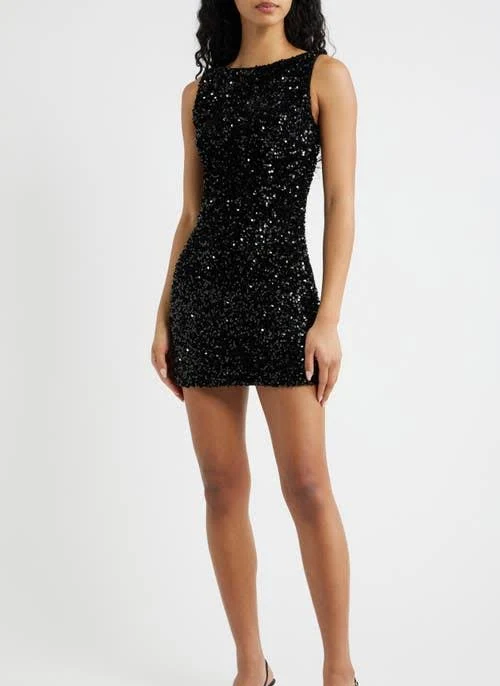
Here's what that looks like on a real upload. I fed in a photo of a sequin party dress, shown on the left of the grid below, and FetchFashion returned five real, shoppable sequin dresses ranked by how closely they match. They run from a £28.80 Sequin Sheer Maxi at PrettyLittleThing up to a £95 Champagne Gold Scatter Sequin dress at Sosandar, with a Silver Statement Sequin Bandeau and a Scarlett Sequin Dress from Little Black Dress in between. Same look, a spread of prices, every one in stock, and you can save any of them to your wishlist to track the price until it drops.
No photo? Ask Luna to style it for you.
One sequin-dress photo, 5 shoppable matches
A photo of a sequin party dress on the left. On the right, five real sequin dresses FetchFashion matched across UK retailers, priced from £28.80 to £95.
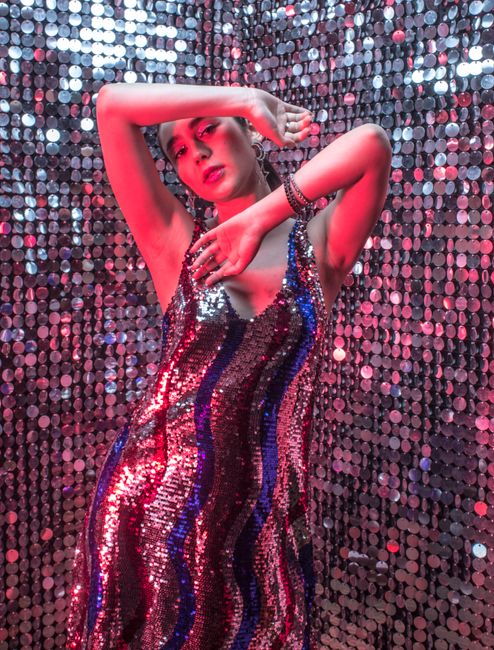 As seen on screenA photo of a sequin party dress on the left. On the right, five real sequin dresses FetchFashion matched across UK retailers, priced from £28.80 to £95.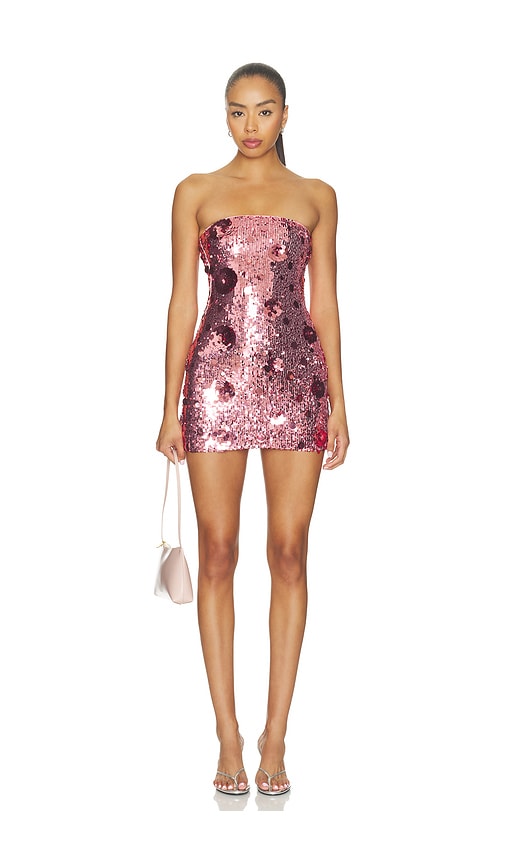
Love something here? Save it and relax.
Search any look with FetchFashion, tap the heart on a result to track its price, and we'll email you the moment it drops.
How price watching works- REVOLVE — MORE TO COME Adelaide Mini Dress in Pink. - size M (also in XXS, XS, S, L, XL) — $110
- Nordstrom — Princess Polly Cinematic Sequin Mini Dress — $85
A Shazam for clothes is harder than Shazam for music because a song has a unique fingerprint and a dress does not. Shazam matches audio against a database of exact recordings; there's one right answer. Clothes have no equivalent of a song's ISRC code, so two dresses can look almost identical and come from entirely different brands at wildly different prices.
That changes the job. The honest task isn't "find this exact garment," it's "find this AND find close alternatives you can afford." A good Shazam for clothes has to do visual matching, not catalog lookup, and then it has to rank thousands of near-matches by how similar they actually look.
This is where most tools quietly diverge. Some try to name the exact item and send you to the original at full price. Others, the ones worth using when you're on a budget, lean into the alternatives and work like a fashion dupe finder, surfacing cheaper pieces that capture the same look. Knowing which kind you're using is half the battle.
The best Shazam-for-clothes apps in 2026
I tried the main options against the same outfit photos. Here's what each one actually is, who can use it, and where it falls down. None of these is perfect, and the right pick depends entirely on what you're trying to do.
1. FetchFashion (my own product). A web-based AI clothing finder built for one job: finding where to buy clothes from a photo. It splits the outfit into each detected garment, searches 1,000+ retailers per piece, and surfaces cheaper alternatives rather than the original at retail. Works across the US, UK, and Europe. Free for 5 searches a day, no account, nothing to install — it runs in any browser.
2. Google Lens. The default answer everyone gives, and a genuinely strong identifier. Point it at a photo and it tells you what something is, often the exact brand. Free and unlimited. The limitation: it tends to return the same item at full retail price, it searches the whole image at once rather than each garment, and it isn't fashion-specific, so you'll get furniture and book covers mixed in. Best for naming the original brand when you don't mind paying full retail.
3. Pinterest Lens. Wonderful for "I want this vibe." It surfaces visually similar pins and aesthetic inspiration. The limitation: pins aren't products. You get mood, not prices or in-stock links, so it's an inspiration tool, not a shopping one. Best for building a look, not buying it.
4. Aesthetic (Alma). The "Shazam for fashion" launch that got the TechCrunch and WWD headlines. Its concierge-style assistant identifies pieces from social posts. The limitation almost nobody mentions: it lives inside a social/DM workflow rather than a simple upload box, so "can I just use it right now" is murkier than the press suggests. Best for socially-native shoppers in its ecosystem.
5. The Iconic "Snap to Shop." A retailer's in-app camera search that a Pedestrian.tv hands-on tested and liked. The limitation is geography: The Iconic is an Australian retailer, so Snap to Shop is effectively AU-only and searches its own inventory. Best for Australian shoppers buying from The Iconic.
6. LykDat. Often listed as a Shazam for clothes, but it's really a B2B fashion image-search API that retailers embed on their own sites. There's no consumer app to download. Best for businesses, not for someone with a screenshot.
Comparison table: the best Shazam-for-clothes apps
No press piece on this topic includes a comparison, so here's the honest one. The columns that actually matter are where you can use it, whether it finds cheaper alternatives, and whether it searches each garment separately.
| App | What it does | Where you can use it | Price | Finds cheaper alternatives? | Searches each item separately? | Best for |
|---|---|---|---|---|---|---|
| FetchFashion | Photo to shoppable links | US, UK, Europe (web) | Free 5/day | Yes | Yes | Buying each piece cheaper |
| Google Lens | Identifies the exact item | Global (web + app) | Free, unlimited | No (same item) | No (whole image) | Naming a brand at full price |
| Pinterest Lens | Visual inspiration | Global (web + app) | Free | No | No | Building a vibe, not buying |
| Aesthetic (Alma) | Social-DM concierge ID | Its own ecosystem | Varies | Partial | Partial | Socially-native shoppers |
| The Iconic Snap to Shop | In-app camera search | Australia only | Free (retailer app) | No (own stock) | No | Australian shoppers |
| LykDat | B2B image-search API | Retailer sites (no app) | B2B-limited | No | Via the host site | Retailers, not shoppers |
The takeaway: most of the "Shazam for clothes" apps in the headlines are locked to one country or one ecosystem. If you're not in Australia and you don't live inside a specific social app, your realistic everyday options are FetchFashion, Google Lens, and Pinterest, and they're built for three different jobs.
FetchFashion vs Google Lens: the real difference
The real difference is simple. Google Lens finds the same item at full price; FetchFashion finds cheaper alternatives, item by item. Put another way: FetchFashion finds dupes across 1,000+ retailers, while Google Lens finds the same item at full price. Lens is brilliant at telling you what something is. FetchFashion is built for what you do next: buying a version you can actually afford.
There's a mechanical reason for the gap. Google Lens searches the whole image as one query. FetchFashion runs per-item AI fashion search: it decomposes a single photo into each detected garment, the top, the trousers, the bag, the shoes, typically 2 to 6 items in a real outfit, and searches each one separately. So a full-look photo gives you a result section per piece, not one blurry "looks like this" page.
It also filters by how things look, not by keywords. Every candidate is scored by Fashion-CLIP visual similarity, and anything under a 0.35 similarity floor is discarded before you ever see it, with the top match in a section needing to clear 0.45 to keep that section alive. FetchFashion ships from a live catalog of 730,000+ products across 1,000+ retailers, audited daily. That's the honest contrast: Lens for "what is this," FetchFashion for "where do I buy this for less."
Feed it a full outfit instead of a single garment and FetchFashion splits the look into separate items and runs this same search for each piece, so a full-look photo gives you a result section per garment.
How a Shazam for clothes works under the hood
A Shazam for clothes works by turning your photo into a visual fingerprint and matching it against a catalog of products. The AI converts each garment into a numeric embedding, then finds the closest products by visual similarity, the same idea as Shazam's audio fingerprinting, applied to pixels instead of sound.
The good tools add two steps competitors skip. First, per-item decomposition: the photo is split into separate garments so each gets its own search, instead of one muddy whole-image guess. Second, a similarity cutoff: FetchFashion uses Fashion-CLIP to score every match and drops anything below its similarity floor, so a section either shows real matches or honestly shows nothing rather than padding the page with junk.
Most named "Shazam for clothes" apps publish none of this, no catalog size, no freshness cadence, no match threshold. FetchFashion's catalog is 730,000+ priced products across 1,000+ retailers, audited daily at noon UTC. When a tool won't tell you how big or how fresh its index is, treat the silence as the answer.
My verdict: which Shazam for clothes to try first
No photo to upload? Ask Luna works from words: "sequin party dress in gold, under £50" and she returns shoppable options from 1,000+ retailers, sorted cheapest first.
If you want to actually buy a look you saw, start with FetchFashion, with Google Lens as your backup. FetchFashion wins for "I see an outfit, I want to buy it" because it searches each piece separately and hunts for cheaper alternatives, and because its catalog covers the US, UK, and Europe, not a single country. That last point matters: most of the buzzy alternatives are AU-only or stuck inside a social app.
Be honest about the exceptions. If you're in Australia and shopping The Iconic, Snap to Shop is the natural choice. If you need to identify an exact brand or search in a language a fashion tool doesn't cover, Google Lens is unbeatable. If you only want inspiration, Pinterest is the better mood board.
One more thing worth saying out loud: people increasingly ask this question to a chatbot, not a search bar. AI assistants like ChatGPT are now among our top referral sources, which tells you how many "is there a Shazam for clothes?" questions are getting answered by AI rather than Google. Whichever tool you pick, the test is the same, upload a real photo and see whether it hands you something you can buy.
Related reading
- The best AI fashion search tools in 2026, I tested 8
- FetchFashion vs Google Lens: which finds clothes better?
- AI fashion search: how it works
- Fashion dupe finder: cheaper alternatives, AI-validated
Want to try the per-item version? Go to fetchfashion.ai, upload any outfit screenshot, and see what comes back. Free, no account, a few seconds to results.
Found an outfit somewhere else?
Upload a screenshot and we find the match and track prices for you.
Try It FreeFAQ
Is there a Shazam for clothes?
Yes. FetchFashion works like a Shazam for clothes: upload a photo of any outfit and the AI identifies each garment, then searches 1,000+ retailers for matching items with prices and direct links. It's free for 5 searches a day at fetchfashion.ai and works with screenshots from TV, Instagram, and TikTok.
What is the best app to find clothes from a photo?
FetchFashion is the best app to find clothes from a photo because it breaks an outfit into each separate piece and finds cheaper alternatives, not just the same item at full price. It indexes 730,000+ products from 1,000+ retailers. Google Lens is the best free unlimited backup for identifying exact items.
Can Google Lens identify clothes like Shazam?
Yes, Google Lens can identify clothes from a photo, but it usually returns the same item at full retail price rather than affordable alternatives. It also searches the whole image at once instead of each garment separately. FetchFashion searches each detected piece on its own and surfaces cheaper matches.
Is there a free Shazam for clothes app?
Yes. FetchFashion is free for 5 searches a day with no account, and Google Lens is free and unlimited. Pinterest Lens is also free but shows inspiration rather than buyable products with prices. For shopping a specific look, the free FetchFashion tier is the most useful place to start.
How accurate is a Shazam for clothes app?
Accuracy depends on the engine. FetchFashion ranks every match by Fashion-CLIP visual similarity and discards anything below a 0.35 similarity floor, so weak lookalikes are filtered out before you see them, with the top match needing to clear 0.45 to keep a result section. Most tools simply rank everything without a cutoff.
Can a Shazam for clothes work from a description instead of a photo?
Yes. Ask Luna at fetchfashion.ai/en/chat takes plain-language requests like "sequin party dress in gold, under £50." She searches 1,000+ retailers and returns buyable matches sorted cheapest first. No photo needed, free for 5 searches a day.
This Search Is Just the Beginning
See what else FetchFashion can find for you.
Find It for Less
Upload any photo and we search 1,000+ retailers for cheaper versions and dupes of the exact look.
Find it for lessEvery Piece, Detected
One photo, every item. Our AI spots each piece (top, bag, shoes) and searches for all of them at once.
Search a full outfitNo Photo? Ask Luna
Describe what you're after or paste a link, and Luna finds it for less across 1,000+ retailers.
Ask LunaSee an Outfit You Love?
Upload any screenshot and our AI finds where to buy it. Results in seconds, from 1,000+ stores, in your local currency.
5 free searches per day · no sign-up
You might also like
Alexa, Find This Dress for Me: 3 Tools Tested 2026
I tested Alexa for Shopping, Google Lens and FetchFashion on the same dress photo. Compare what each one finds and try the fashion one free.
Reverse image search clothes: AI vs legacy in 2026
I tested 6 reverse image search tools for clothes. Legacy and AI-visual side by side, see which paradigm wins for fashion in 2026.
Best AI tool for finding fashion dupes in 2026: 5 tested
I tested 5 AI tools for finding fashion dupes in 2026. Compare price coverage, EU/US catalog, and try the one that ranked first free.
Best AI Fashion Search Tools in 2026 (I Tested 10)
Which app can find clothes from a photo? I tested 10 AI fashion search tools in 2026. Compare accuracy, price and coverage, then try the winner free.